
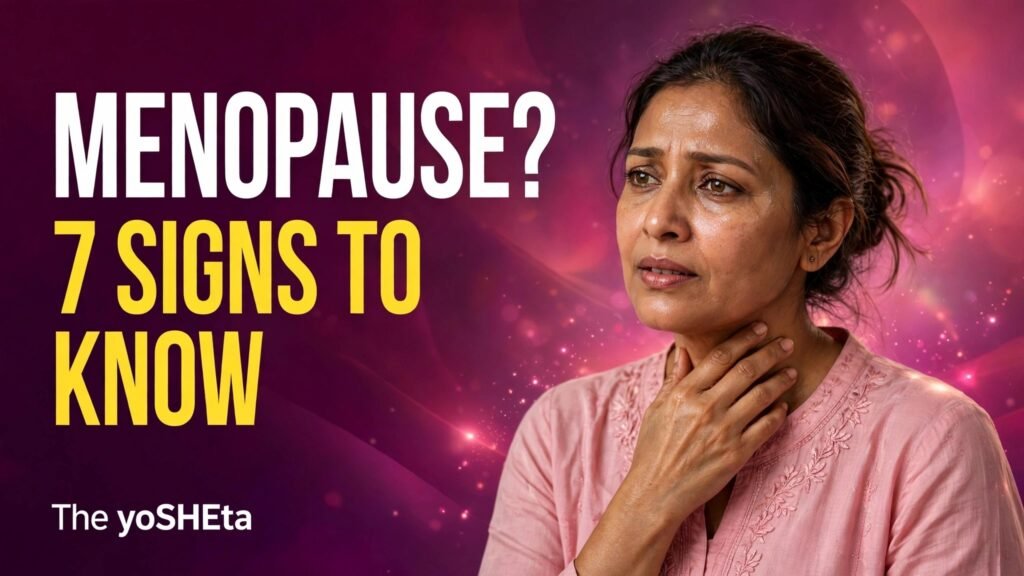
Menopause is a natural stage in a woman’s life, but the changes
that come with it can sometimes be confusing. From sudden hot
flushes to sleepless nights and mood swings, understanding the
symptoms can help women take better care of their health.
Many women experience physical and emotional changes as they
approach menopause. While some may notice only mild symptoms,
others may find that these changes affect their sleep, work and
everyday life.
But how do you know if your body is going through menopause?
What Is Menopause?
Menopause is a natural biological stage that marks the end of
menstrual periods. It is generally confirmed when a woman has
gone 12 consecutive months without a period, provided there is
no other medical explanation.
Menopause commonly occurs between the ages of 45 and 55.
However, the body may begin changing several years earlier.
This transition is known as perimenopause, when
hormone levels fluctuate and menstrual cycles may become irregular.
7 Signs That Could Indicate Menopause
1. Sudden Hot Flushes
Do you suddenly feel extremely hot, even when the room is cool?
Hot flushes can cause a wave of warmth, particularly around the
face, neck and chest. Some women also experience sweating and
a rapid heartbeat.
2. Night Sweats and Poor Sleep
Waking up in the middle of the night feeling hot or sweaty can
make it difficult to get enough rest. Hormonal changes may also
contribute to sleep disturbances.
3. Irregular Periods
Your periods may become lighter, heavier, shorter, longer or less
predictable during perimenopause. However, unusually heavy
bleeding or bleeding after menopause should always be discussed
with a healthcare professional.
4. Mood Swings, Anxiety or Irritability
Some women experience increased irritability, anxiety, low mood
or emotional sensitivity during this transition. Hormonal changes,
poor sleep and everyday stress may all contribute.
5. Vaginal Dryness and Discomfort
Lower oestrogen levels can cause vaginal dryness, irritation and
discomfort during sexual activity. Treatments are available,
so women do not need to suffer in silence.
6. Changes in Energy and Concentration
Some women report tiredness, difficulty concentrating or feeling
less mentally sharp. Poor sleep, stress and other health
conditions can also cause these symptoms.
7. Changes in Bone and Heart Health
As oestrogen levels decline, bone loss can accelerate, increasing
the risk of osteoporosis. Heart health also deserves attention
during midlife, including regular checks of blood pressure,
cholesterol and other risk factors.
Can Menopause Symptoms Be Managed?
Yes. Women do not have to simply put up with symptoms that affect
their quality of life. Treatment depends on symptoms, personal
preferences and medical history.
- Hormone therapy for suitable candidates.
- Non-hormonal medicines for certain symptoms.
- Vaginal moisturisers or lubricants for dryness and discomfort.
- Regular physical activity, a balanced diet and a consistent sleep routine.
- Appropriate bone-health assessments and routine health checks.
Hormone therapy is not suitable for everyone. Discuss the
potential benefits and risks with a qualified healthcare
professional before starting treatment.
Can You Still Get Pregnant During Perimenopause?
Yes. Pregnancy is still possible during perimenopause, even when
periods become irregular. If pregnancy is not desired, discuss
contraception with your healthcare professional.
Menopause does not protect against sexually transmitted
infections, so appropriate protection and testing remain
important when needed.
When Should You See a Doctor?
Speak to a healthcare professional if symptoms are affecting
your daily life, sleep or emotional well-being.
Seek medical advice for unusually heavy or prolonged periods,
bleeding between periods, or any vaginal bleeding after
menopause. Do not assume that all changes are caused by
menopause, as other conditions can produce similar symptoms.
Menopause Is a Natural Transition, Not Something to Be Ashamed Of
Every woman’s experience is different. Some women move through
menopause with few symptoms, while others need additional
support and treatment.
Understanding the changes in your body is an important first
step towards better health. With the right information,
professional guidance and support, women can navigate this
stage of life with greater confidence.
Your health matters at every age. Listen to your body,
ask questions and never hesitate to seek help when you need it.
not a substitute for professional medical advice, diagnosis
or treatment. Consult a qualified healthcare professional
about personal symptoms or treatment options.
Source:
World Health Organization (WHO) – Menopause Fact Sheet
The yoSHEta
Stories • Strength • Success