International Leadership Feature
Also read Canva Layoffs 2026: A Lesson in Responsible Leadership
From advancing women’s representation in global policy to calling for international oversight of artificial intelligence, Gabriela Ramos is helping shape conversations about the future of humanity.
By THE yoSHEta Editorial Team
The future is increasingly being shaped by artificial intelligence, global economic decisions and technological innovation. But an important question remains: Who gets to influence these decisions, and whose interests are protected?
For Gabriela Ramos, this question goes beyond technology. It is about human rights, equality, international cooperation and ensuring that progress benefits society as a whole.
Also read Shafaq Naaz Karwa Chauth Controversy: Actress Responds to Trolls
An international policy leader from Mexico, Gabriela Ramos has built a career spanning the Organization for Economic Co-operation and Development (OECD), UNESCO, the G20 and international AI governance initiatives.
Her recent commentary turns to a critical global question: how should the world govern artificial intelligence before its impact becomes too difficult to manage?
Gabriela Ramos: From Mexico to the International Leadership Stage
Gabriela Ramos’s professional journey reflects the influence that economics, public policy and international diplomacy can have on global development.
Educated at Harvard University’s John F. Kennedy School of Government, where she earned a Master’s degree in Public Policy, Ramos developed a career focused on international cooperation and inclusive development.
At the OECD, she served as Chief of Staff and Sherpa to the G20 and G7, working on issues including economic development, gender equality, climate change and social inclusion.
Her work placed her in discussions involving governments and international institutions, where policy decisions can influence millions of lives.
Rather than viewing economic development as a measure of growth alone, her work has consistently connected progress with social responsibility and equal opportunity.
Gabriela Ramos on Making Women’s Equality Part of Economic Policy
One of the defining dimensions of Ramos’s international career has been her contribution to advancing gender equality.
At the OECD, she helped bring women’s economic empowerment into the center of global policy discussions.
She was involved in advancing the G20 gender equality agenda and the Women 20 (W20), an engagement group that brings women’s perspectives and recommendations into G20 discussions.
The larger message behind this work is significant: women’s equality should not remain a separate conversation. It must be part of economic planning, employment policies, leadership development and decision-making.
Women’s participation in the economy is not simply about increasing the number of women in workplaces. It is also about ensuring that women have access to opportunities, resources, leadership positions and the power to influence decisions.
For countries seeking sustainable development, this is an essential part of the conversation.
Gabriela Ramos and UNESCO’s Global Ethics of Artificial Intelligence
As artificial intelligence began transforming societies, Ramos took on another important area of global leadership.
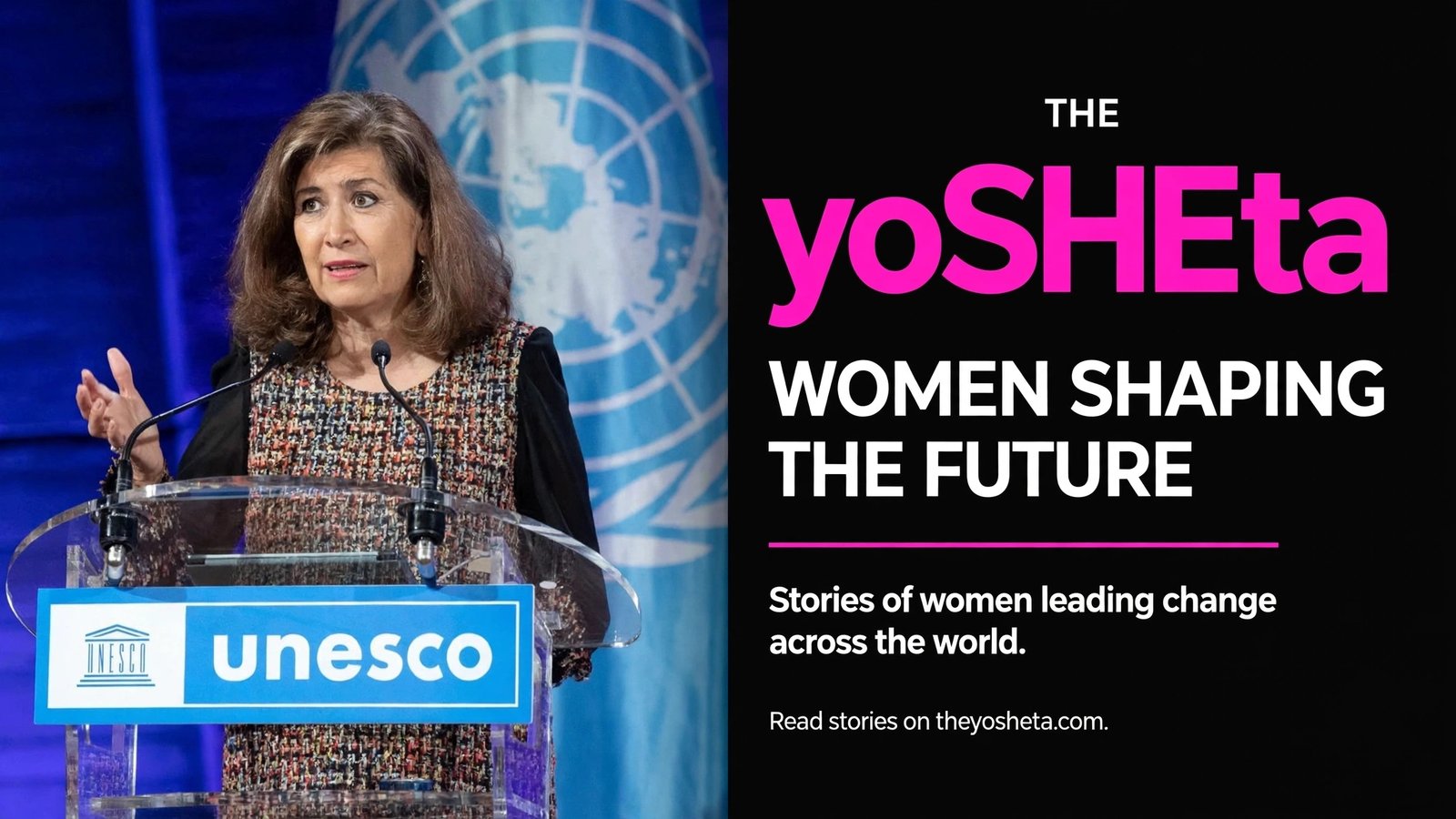
During her tenure as UNESCO’s Assistant Director-General for Social and Human Sciences, from 2020, she played a leading role in advancing the organization’s work on ethical AI.
A major milestone came in November 2021, when UNESCO Member States adopted the Recommendation on the Ethics of Artificial Intelligence.
The framework addressed important issues including human rights, privacy, transparency, accountability, gender equality and the responsible use of technology.
It was the first global standard-setting instrument of its kind.
The significance of this initiative extends beyond the technology industry. AI systems increasingly influence education, healthcare, employment, public services and access to information.
If these systems are designed without considering existing inequalities, they can reinforce discrimination and exclude already underrepresented communities.
Ramos’s work helped place human values and social responsibility at the center of international AI governance discussions.
Gabriela Ramos’s Latest Message: The World Needs Global AI Oversight
One of Gabriela Ramos’s latest contributions to the global AI debate is her call for stronger international oversight.
In her October 2, 2026 article for Project Syndicate, titled “Global AI Oversight Now,” she argues for a new international agency capable of setting standards and responding to emergencies involving artificial intelligence.
Her argument reflects a growing concern: AI technologies are developing across national borders, while governance systems remain fragmented.
Individual governments may struggle to address risks that affect multiple countries simultaneously.
Ramos believes international cooperation and independent oversight are necessary to ensure that powerful AI technologies remain accountable.
This debate is particularly important for developing countries, which risk having limited influence over the rules governing technologies that will shape their economies and societies.
Her position is not simply about regulating innovation. It is about ensuring that technological advancement serves the public interest.
Looking Ahead: Women in the Digital Future
Another important development in November 2026 is her participation as a Featured Conversationist at the 10th Reykjavik Global Forum.
The forum brings together women leaders and their allies from around the world to discuss ways to advance equality and increase women’s influence in leadership.
Ramos has highlighted the challenges women face in the digital world and the importance of developing concrete solutions.
Her involvement reflects an important concern for the next generation: women must not simply become users of emerging technologies. They must also participate in creating, governing and shaping them.
She has also shared her upcoming involvement in the AI Diplomacy Council of the Tech Diplomacy Global Institute for its 2027–2028 mandate, which will bring together experts from government, industry, academia and civil society.
Her stated interest includes ensuring that young practitioners, particularly those from the Global South, participate in international AI discussions.
Leadership That Goes Beyond Positions
What makes Gabriela Ramos’s professional journey particularly relevant is the range of issues she has brought together.
Gender equality, economic opportunity, ethical technology and international cooperation are often discussed separately. Her work demonstrates how closely these subjects are connected.
For young women considering careers in public policy, technology, economics or international relations, her journey offers an important lesson.
Leadership is not only about reaching a position of influence. It is also about using that influence to bring important issues into decision-making spaces.
The next generation of women leaders will need more than professional qualifications. They will need the confidence to question existing systems, the knowledge to understand complex challenges and the courage to participate in shaping solutions.
For more stories of women driving change, read our feature on Navi Pillay and the 2026 Nobel Peace Prize and our latest women’s empowerment news.
The yoSHEta Perspective
At THE yoSHEta, we believe women’s leadership should be recognized in every space where the future is being decided.
From businesses and communities to international institutions and technology policy, women deserve not just representation but meaningful influence.
Gabriela Ramos’s journey reminds us that women’s empowerment is not limited to individual success. It also means changing the systems that determine who gets opportunities, who makes decisions and whose voices are heard.
As artificial intelligence reshapes the world, one thing must remain central: technology should advance humanity, not leave parts of humanity behind.
The future needs women’s voices. More importantly, it needs women shaping the future.
THE yoSHEta — Stories • Strength • Success.
Editorial note: This is an independently researched leadership profile. It is not an interview or an endorsement by Gabriela Ramos.