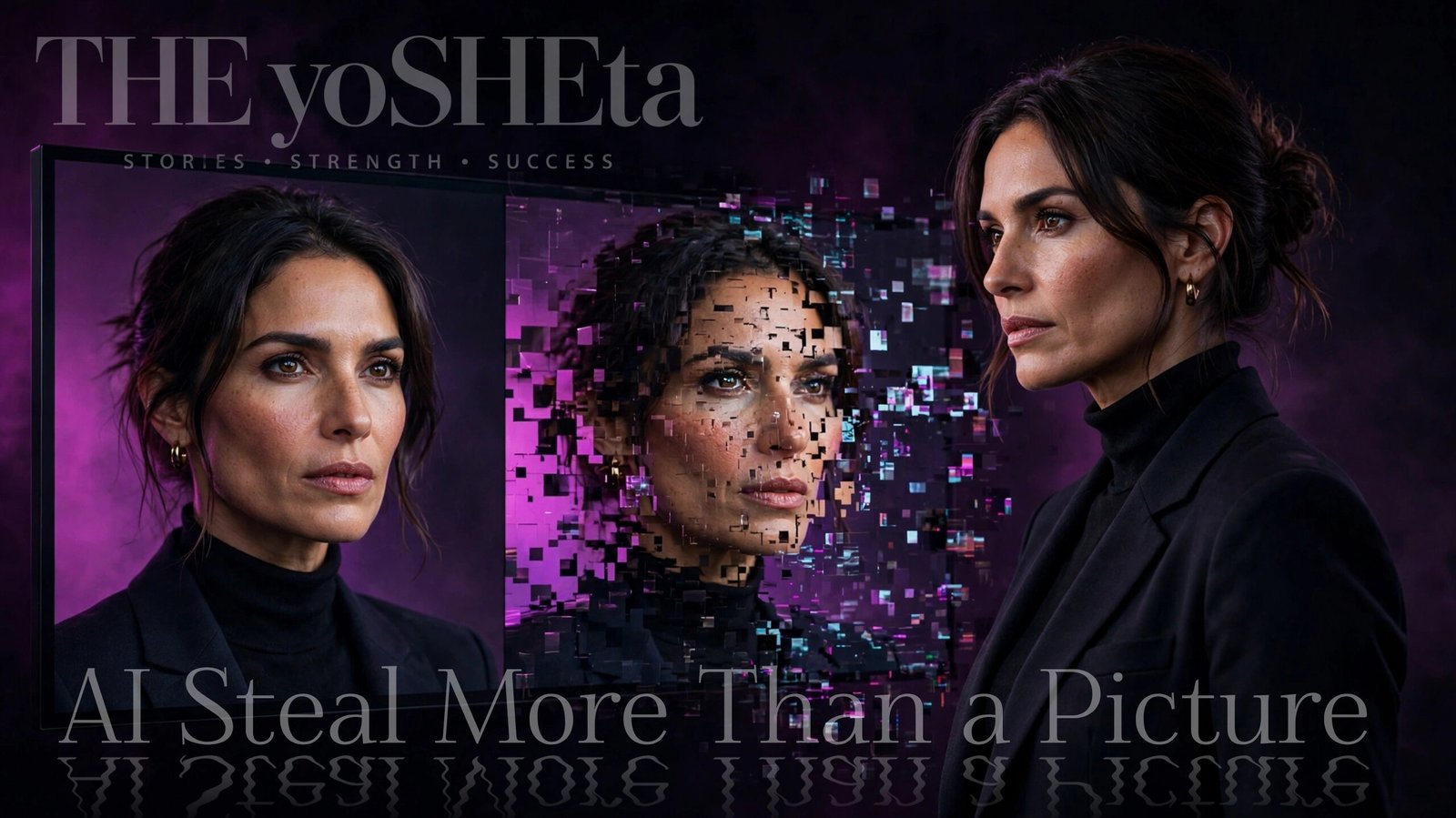
AI Steal More Than a Picture: How Deepfakes Threaten Women’s Privacy and Consent
Artificial intelligence has changed the way we create images, videos and stories. It can make beautiful art, bring old photographs to life and help people express ideas in new ways. But there is another side of AI that women are increasingly being forced to deal with. A woman’s photograph can be taken from social media and transformed into an image she never created. Her face can be placed on another person’s body. Her voice can be copied. A normal photograph can be turned into sexual or humiliating content. And sometimes, the result can look frighteningly real. This is the growing problem of AI deepfakes and non-consensual intimate content.A Photograph Is Not Permission
Many women share photographs online every day. A selfie. A family photograph. A professional portrait. A picture from a holiday. A photograph from a film or event. Making a photograph public does not mean giving everyone permission to manipulate it. A woman sharing her picture is not consenting to someone changing it into sexual content. Visibility is not consent.Female Celebrities Are Especially Vulnerable
Female celebrities live under constant public attention. Their photographs and videos are available across thousands of websites and social-media platforms. That enormous digital footprint can also make them easier targets. A celebrity may spend months working on a film, a photoshoot or a public appearance. Someone can take an ordinary image from that work and use AI to create something completely different. The resulting fake may then circulate without the celebrity ever having participated in it. The technology may be artificial. The damage to the person can be very real.The Internet Can Turn a Lie Into a “Memory”
One of the most disturbing things about deepfakes is their ability to create false memories. Imagine someone seeing a manipulated video of a female celebrity for the first time. They may believe:- “She actually did this.”
- “She actually said this.”
- “That really happened.”
Women Should Not Have to Protect Themselves by Disappearing
When women face online harassment, there is often an easy response:- “Don’t post photographs.”
- “Don’t share personal information.”
- “Stay away from social media.”
- “Be careful about what you wear.”
The Problem Goes Beyond Celebrities
Deepfakes are often discussed when a famous actress becomes a target. But the technology does not care whether a woman is famous. A college student. A working professional. A homemaker. A content creator. A public figure. A teacher. A woman with a small social-media account. Anyone whose photograph is available online can potentially become a target. For women without public visibility, the consequences can be even harder because they may not have access to legal teams, public support or media attention.Consent Must Exist Online Too
We have spent decades talking about consent in relationships, workplaces and society. Now we need to talk about digital consent. Before using someone’s photograph, voice or identity in a new context, we should ask a simple question: Did this person agree to it? If the answer is no, technology should not be used to manufacture that person’s participation. A woman’s face should never become a tool for someone else’s sexual fantasy, joke, revenge or entertainment.What Happens After the Fake Disappears?
Removing a post does not necessarily remove its impact. Someone may have already taken a screenshot. Someone may have downloaded the video. Someone may have reposted it somewhere else. Someone may have sent it privately. This creates a frightening reality for victims: the internet can keep repeating something even after the original source is gone. That is why platforms need faster reporting and removal systems, and why laws need to keep developing alongside AI technology.Don’t Become Part of the Abuse
There is also a role for ordinary internet users. When you see a sexual deepfake of a woman, curiosity can make people click. Shock can make people forward it. Humour can make people repost it. But every share increases the reach of the abuse. Instead:- Don’t download it.
- Don’t share it.
- Don’t ask others for it.
- Report it.
- Support the woman being targeted.
A Woman’s Digital Identity Deserves Protection
We often talk about protecting passwords, bank accounts and personal information online. We also need to protect something equally important: Our identity. A face is not just an image. A voice is not just an audio file. A woman’s digital identity is connected to her reputation, relationships, career and sense of safety. AI should help women express themselves — not give strangers a way to rewrite their identity without permission.The Future Needs an AI Culture Built on Consent
AI is not going away. It will become more powerful, more accessible and more deeply connected to everyday life. That makes the conversation about ethics even more important. We need better laws. We need responsible technology companies. We need stronger reporting systems. We need digital education. And we need a culture where people understand that creating something with AI does not make the consequences unreal. A fake image can still cause real humiliation. A fake video can still cause real fear. A fake voice can still damage a real person’s reputation. And a woman’s consent should never be replaced by an algorithm.So, What Will You Do?
The next time a manipulated image or video of a woman appears on your feed, pause before you click, laugh, save or share. Ask yourself:- Would I want this done to me?
- Would I want this done to my sister, daughter or friend?
- Am I helping the abuse spread by sharing it?