When a Puncture Shop Becomes a Mathematics Classroom
Imagine a child struggling to understand mathematics from a textbook. Numbers and measurements may seem confusing when they exist only on a page. Now imagine that child standing beside a bicycle tyre at a puncture repair shop. Suddenly, mathematics becomes something the child can see and understand. Through practical learning experiences, children can explore the circumference of a tyre, observe how a bicycle pump works and learn about measurements in real-life situations. At a carpenter’s workshop, measurements, shapes and angles become practical concepts. At a garage, students can observe tools, machines and the principles behind their operation. Instead of simply memorising definitions, children get opportunities to ask questions, observe processes and connect ideas with real experiences.A Village That Teaches Beyond Books
A village offers countless opportunities for learning. A farm can introduce children to crops, soil, water and agricultural practices. A tailor’s shop can demonstrate measurements and calculations. A local business can help students understand money and everyday transactions. These experiences show children that mathematics, science, communication and problem-solving are not limited to school subjects. They are part of everyday life. Local workers also become valuable sources of knowledge. Farmers, mechanics, carpenters and other skilled professionals can help children appreciate the skills and effort involved in different occupations. For rural students, this approach can be particularly meaningful because many learning opportunities already exist in their surroundings. A creative teacher can turn familiar places into opportunities for discovery without depending entirely on expensive equipment.Beyond Marks: Building Confidence and Life Skills
Education is not only about finding the correct answer in an examination. It is also about learning how to think, communicate, make decisions and face unfamiliar situations. Practical learning gives children opportunities to develop these abilities. They can practise asking questions, interacting with people, understanding money and observing how different workplaces function. Experiences beyond familiar surroundings may also encourage children to explore new interests and discover abilities they never knew they had. Curiosity is an important part of lifelong learning. When children begin asking questions such as “How does this work?” or “Why does this happen?”, they take an active role in their education. This approach reminds us that students should not be treated merely as recipients of information. They should be encouraged to become active participants in their own learning.Every Child Deserves the Opportunity to Learn
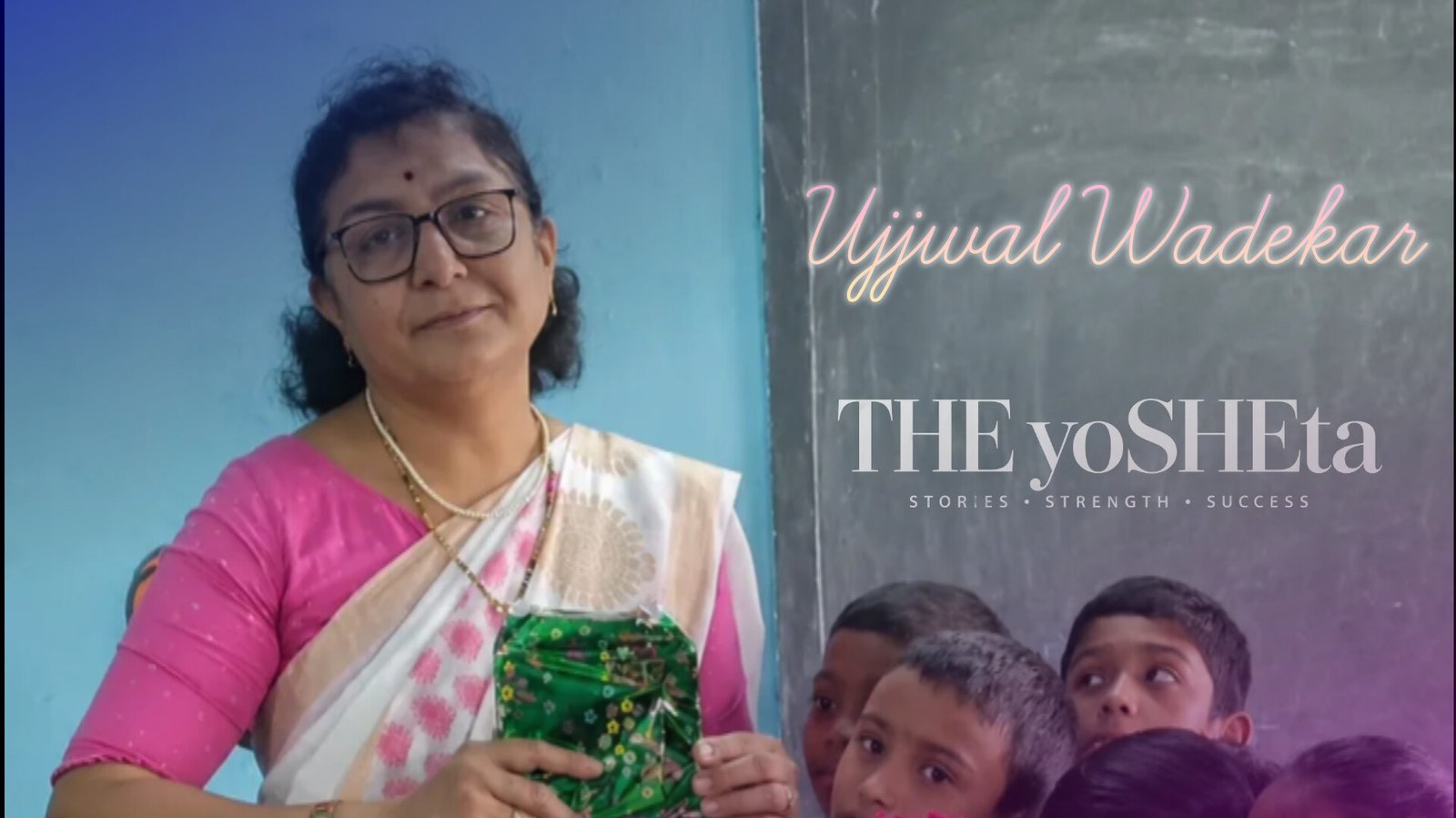
Children do not all learn in the same way. Some understand a concept quickly by reading about it, while others benefit from seeing it demonstrated or experiencing it themselves. Practical activities provide additional ways to understand difficult concepts. They can make lessons more engaging and help students recognise their strengths. Ujjwala Wadekar’s story draws attention to an important message: children from rural communities have talent and potential, too. They deserve encouragement, exposure and opportunities to develop their abilities. A child's future should not be limited by the place where they grow up or the resources available in their school.Teaching With Purpose
Ujjwala Wadekar’s teaching approach has attracted attention for connecting education with real-life experiences. Her journey reminds us that meaningful educational change does not always begin with an expensive building, advanced technology or specialised equipment. Sometimes, it begins with a teacher who looks at an ordinary place and sees an extraordinary learning opportunity. A tyre can become a mathematics lesson. A workshop can become a place to explore science. A farm can introduce children to nature, food and responsibility. The difference lies in how a teacher helps children connect these experiences to the knowledge they need.What Can Other Schools Learn From Her Approach?
Ujjwala’s story offers ideas that schools and educators in different parts of India can adapt to their own communities.- Connect lessons to everyday life: Use familiar objects and local workplaces to explain difficult concepts.
- Encourage questions: Give children the confidence to ask why something happens instead of memorising answers without understanding them.
- Respect practical knowledge: Learn from farmers, mechanics, carpenters, tailors and other skilled workers.
- Teach life skills: Include communication, financial awareness, teamwork and problem-solving alongside academic learning.
- Make learning accessible: Explore low-cost activities using resources already available in the community.
Sometimes, the Best Classroom Has No Walls
A teacher’s influence cannot always be measured by examination results alone. It can also be seen in a child who begins asking questions, a student who gains confidence or a young person who discovers a new interest. Ujjwala Wadekar’s story invites us to reconsider what a classroom can be and what a teacher can do. Children need more than information. They need opportunities to explore, experiment, understand and imagine what their lives could become. The world is full of lessons waiting to be discovered. Sometimes, all it takes is one teacher willing to open the classroom door.At The yoSHEta, we believe stories of women creating change in their communities deserve to be shared. Their work can inspire possibilities far beyond the places where they begin.Real Women. Real Stories. A Stronger Tomorrow.